
Erik Agner, CEO Polypure AS
The COVID-19 pandemic created a demand for a fast response to provide vaccines to a concerned world population. In this post, we will describe how Polypure developed monodisperse, heterobifunctional PEGs of higher molecular weights for advanced pharmaceutical applications based on the COVID-19 vaccine R&D project.
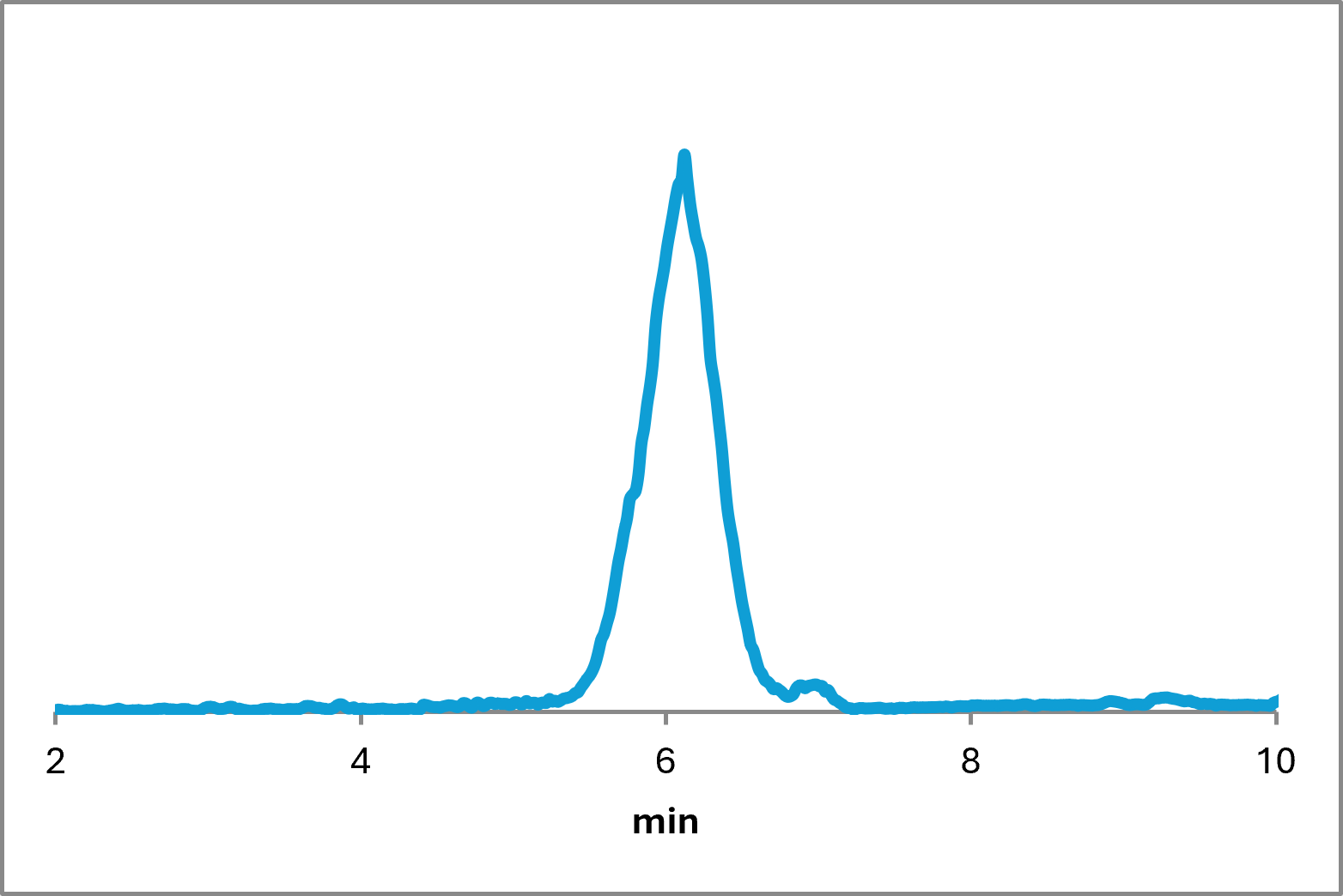
The technology of mRNA incorporated into lipid nanoparticles was a suitable alternative to traditional vaccines and was quickly approved for mass vaccination. One of the critical components in vaccine function is polyethylene glycol, or PEG, which prevents particle agglomeration and reduces immune response. Since we were involved in a vaccine project, we analyzed a sample from a commercial source to investigate the PEG component of the PEG-lipid DMG-PEG 2000. Fig. 1. shows mPEG glycerol ether submitted for analysis by HPLC.

The analysis below shows an expected broad peak from the polydisperse mPEG glycerol ether but also a minor distribution at higher retention time (Fig. 2.)
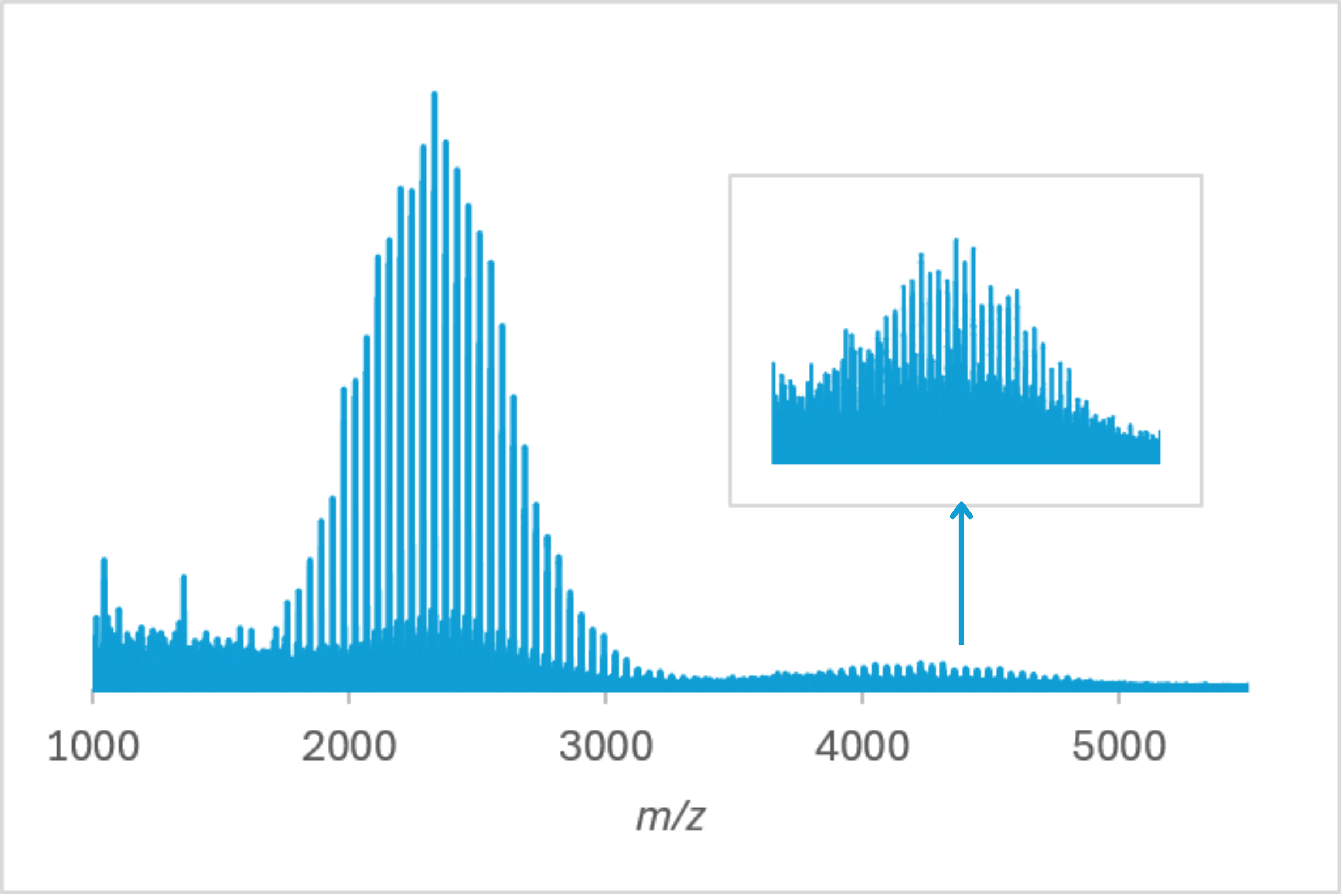
MALDI-TOF analysis confirms the presence of higher molecular weight impurities, confirmed as the homobifunctional bis-glycerol ether, which is an expected impurity present in polydisperse mPEG (Fig. 3).
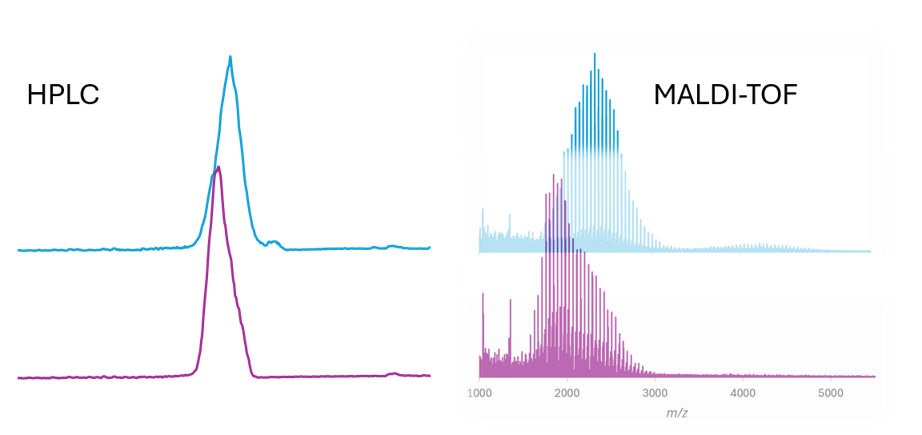
A sample from another manufacturer indicates that the problem was recognised and the cross-binding impurity was removed to a large extent. However, the action also removed a large part of the original Gaussian distribution of the methoxy-PEG derivative (Fig.4.), which may or may not have consequences for performance. Nevertheless, it does reveal that a polydisperse product may not contain the expected material, and that batch-to-batch variation can be significant.
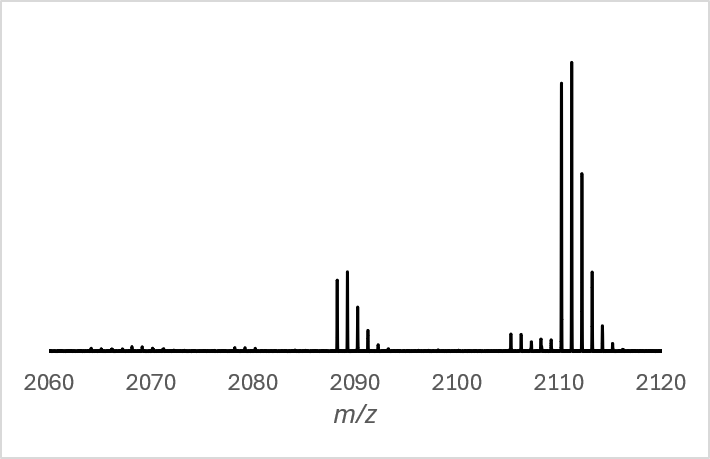
With this learning, we decided to prepare a monodisperse product based on our PEG-45 that matches the intended molecular weight of 2.000 Dalton. As seen from the analytical data, the chromatographic pattern as well as MALDI-TOF analysis show that our product overlaps one of the components in the polydisperse compounds. It also demonstrates the expected pattern from the MALDI-TOF analysis, giving an estimated 98% of the target oligomer (n=45) (Fig. 5.).
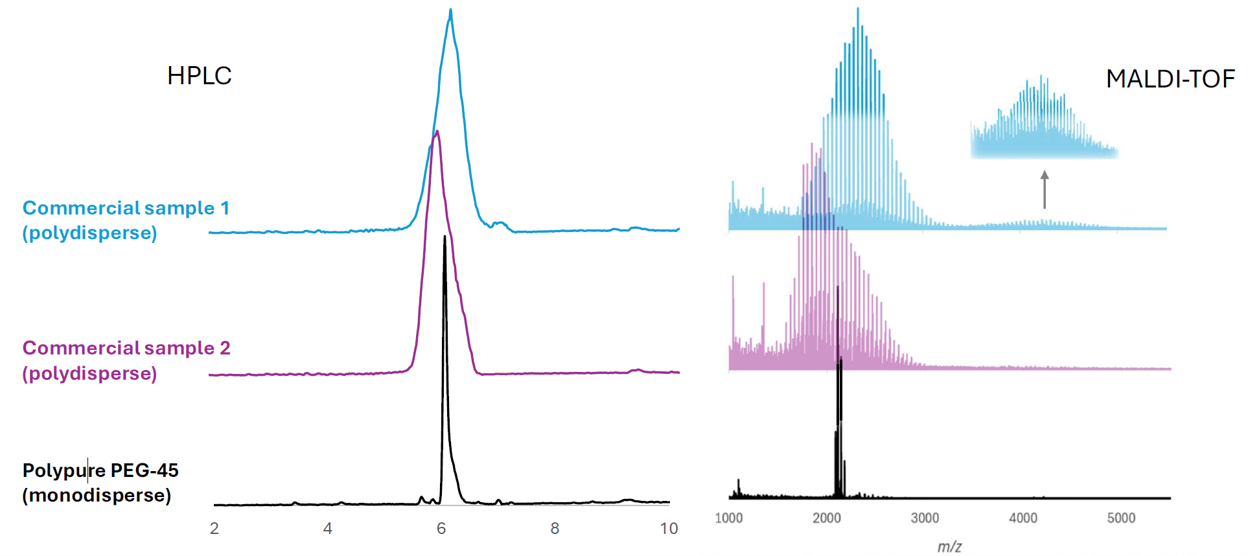
By expanding the MALDI-TOF spectrum of Polypure mPEG-45 glycerol ether displaying sodium adducts primarily, one can see signals corresponding to M+H+ at 2088 and M+Na+ at 2110 (Fig. 6.). The maximum peak corresponds to the average one C13 carbon. There is a very low content of n-1 oligomer present in the sample.
In conclusion, the polydisperse PEG derivatives were certainly able to achieve the intended function, but the lack of control is obvious. For a product which is based on a single oligomer, the expected performance can be anticipated every time, with a reproducibility from batch-to-batch that simplifies processing.