
PEG-45 ( CAS: 28780-46-3)
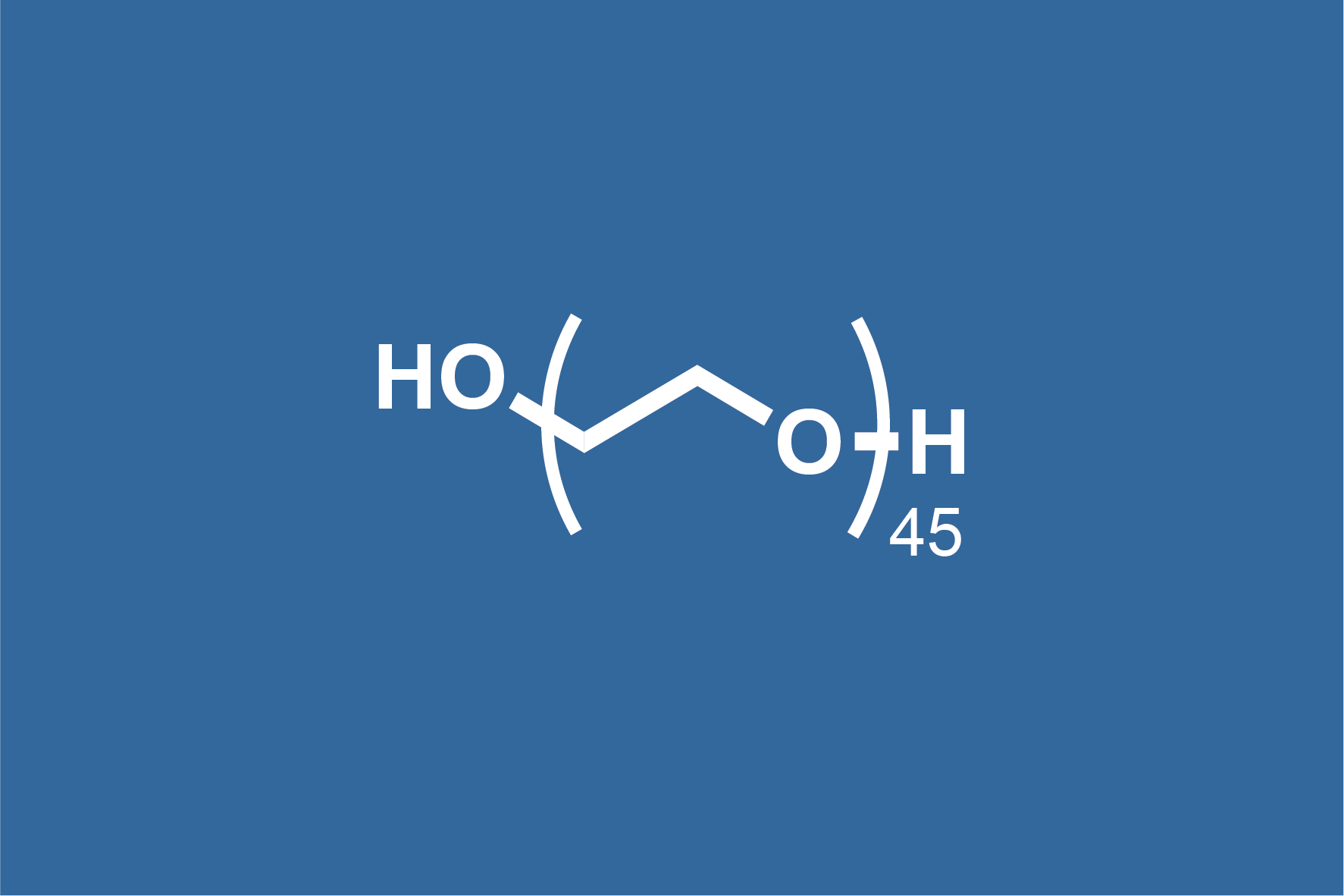
| CAS Number | 28780-46-3 |
|---|---|
| Catalogue number | 10110-4595 |
| Molecular weight | 2000.4 |
| n | 45 |
| Purity | >98% |
| Price | 1g: 180 EUR, 5g: 675 EUR |
SMILES: OCCOCCOCCOCCOCCOCCOCCOCCOCCOCCOCCOCCOCCOCCOCCOCCOCCOCCOCCOCCOCCOCCOCCOCCOCCOCCOCCOCCOCCOCCOCCOCCOCCOCCOCCOCCOCCOCCOCCOCCOCCOCCOCCOCCO
Alternative names: HO-PEG45-OH
Molecular formula: C90H182O46
Applications: PEG-45 is a monodisperse, single-length alternative to polydisperse PEG 2000. PEG-45 is a biocompatible, water-soluble linker and polymer building block in drug delivery. The main advantage of the long chain is to improve solubility and flexibility and reduce nonspecific protein immune recognition. Compared with conventional polydisperse PEGs, it produces a single, well-defined conjugate species, resulting in improved analytical characterisation, reproducibility, and more predictable pharmacokinetic and pharmacodynamic properties.
Monodisperse PEG-45 is widely used as a precisely defined hydrophilic spacer in bioconjugation and PEGylation of proteins, peptides, antibodies, antibody drug conjugates (ADCs), oligonucleotides, aptamers, small-molecule drugs, and imaging agents.
With its defined chain length and molecular weight (MW: 2000.4), PEG-45 provides an optimal balance between hydrophilicity, steric shielding, and molecular flexibility, making it suitable for drug delivery systems, targeted therapeutics, radiopharmaceuticals, diagnostics, surface functionalisation, hydrogels and biomaterials, nanomedicine, and oligonucleotide therapeutics. The precise chain length enables uniform linker geometry, improved colloidal stability, reduced nonspecific interactions, reproducible material properties, and reliable use as an analytical reference standard and linker optimisation.
Polypure’s PEG-45 in publications
Basavci, E., Mali, A., Kalati, M., Marques Marcilli, R., & Srinivas, M. (2026). Monodisperse PEG engineering for quantifiable surface conjugation on PLGA nanoparticles. Nanoscale Advances. https://doi.org/10.1039/d6na00116e
Interested in this product?
✉️ Send an inquiry to order@polypure.no